In PCB manufacturing, copper thickness is an important specification. We often see 0.5oz, 1oz, 2oz, and even 3oz+ copper, but why do different PCBs require different copper thicknesses?
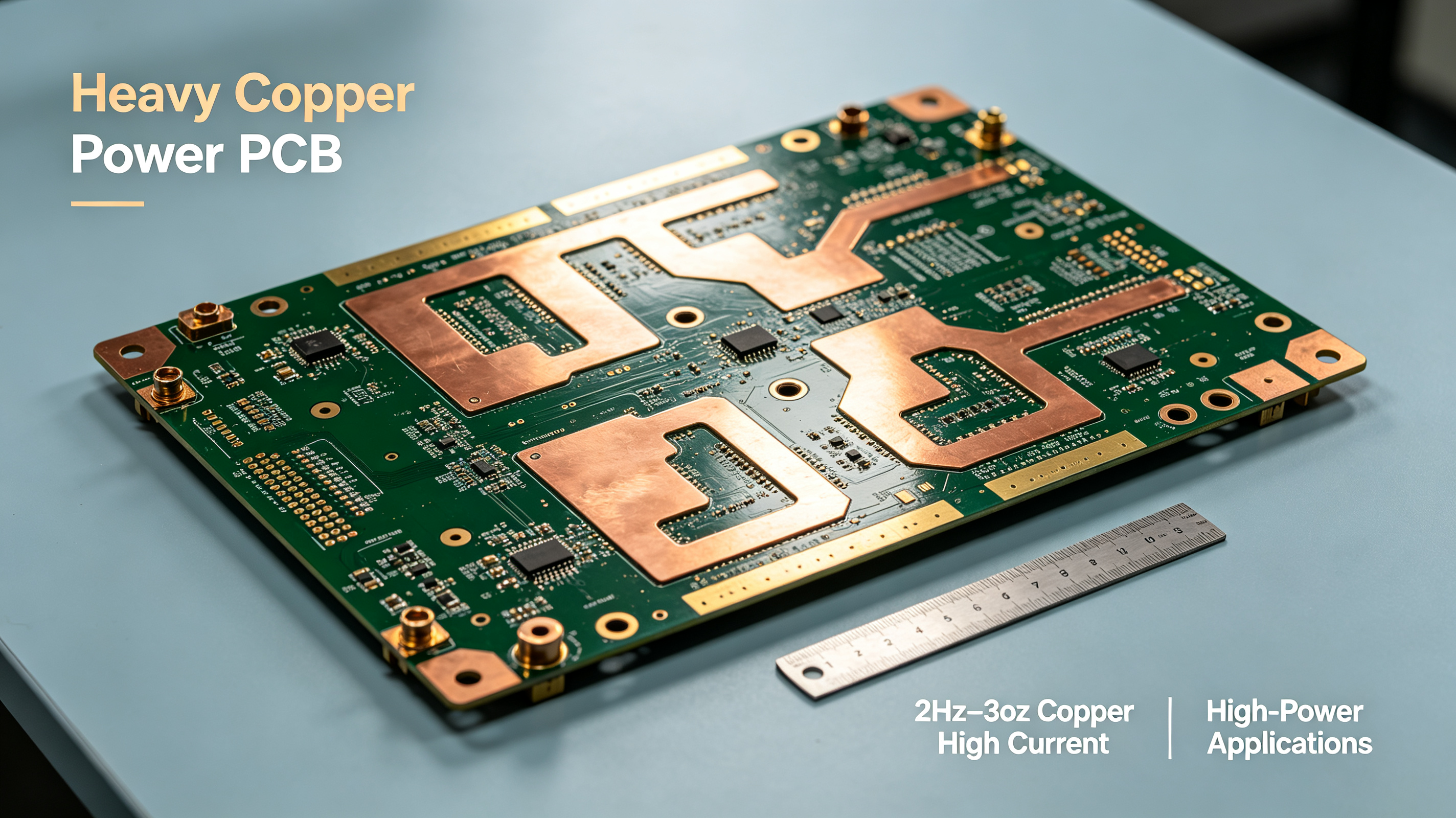
01 | Thicker Copper Supports Higher Current
Thicker copper provides a larger conductor cross-section and generally lower resistance, allowing the PCB to carry higher current with less heat generation. Therefore, 2oz, 3oz, or heavier copper is often used in power electronics, industrial control, automotive electronics, energy storage, and other high-power applications.
02 | What Are the Common Copper Thicknesses?
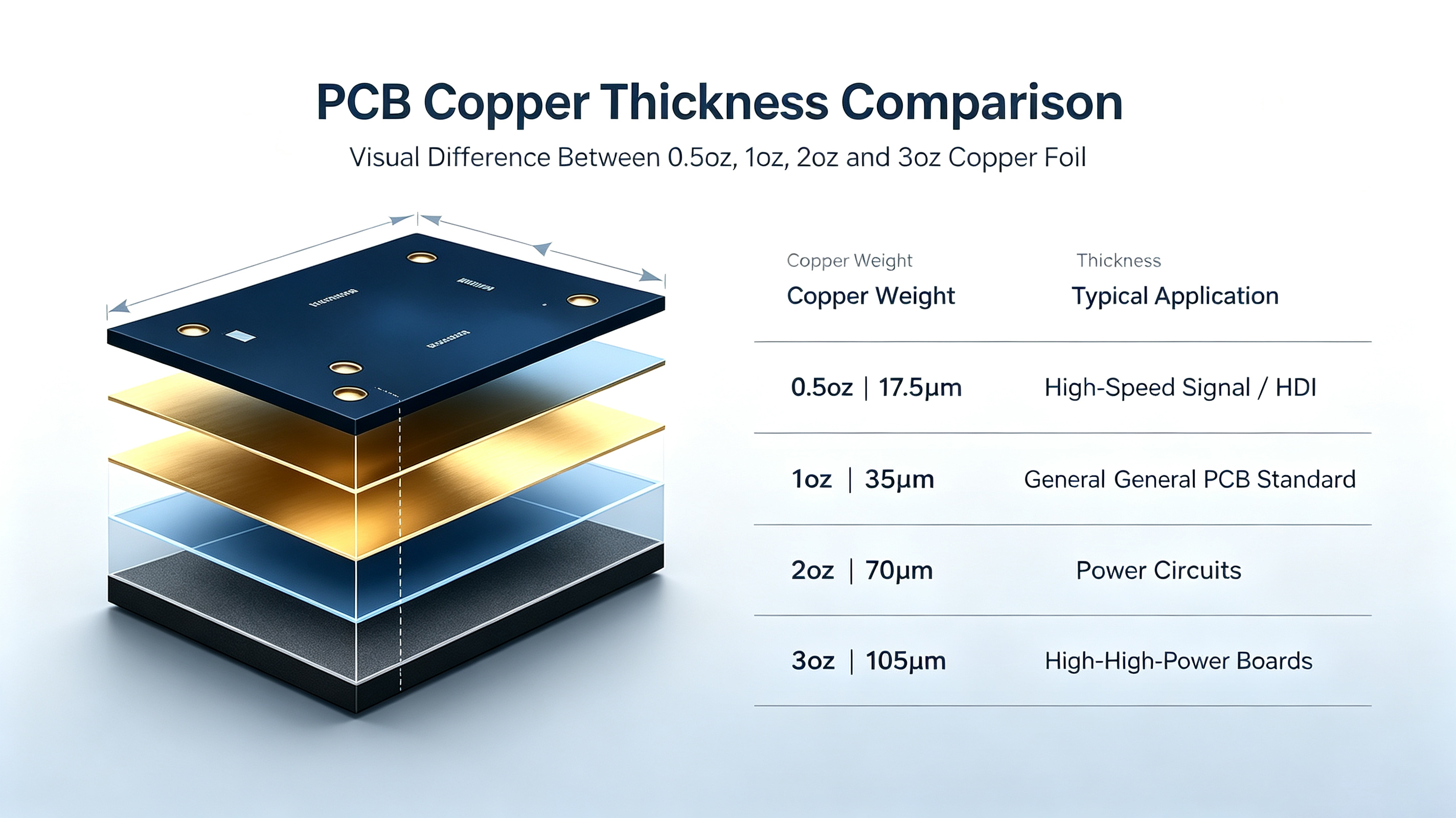
Typically, 1oz copper is approximately 35μm, 2oz is about 70μm, and 3oz is about 105μm, while 0.5oz is approximately 17.5μm. Different PCB layers can use different copper weights depending on current, routing density, and impedance requirements.
| Copper Weight (oz) | Thickness (um) | Typical Applications |
| 0.5oz | 17.5μm | High-speed signal boards, HDI, high-density fine-line PCBs |
| 1oz | 35μm | General consumer & industrial standard PCBs (Industry mainstream) |
| 2oz | 70μm | Power supply boards, medium-power equipment, energy storage auxiliary circuits |
| 3oz | 105μm | Automotive electronics, industrial high-power, energy storage main control boards |
03 | Thicker Copper Is Not Always Better
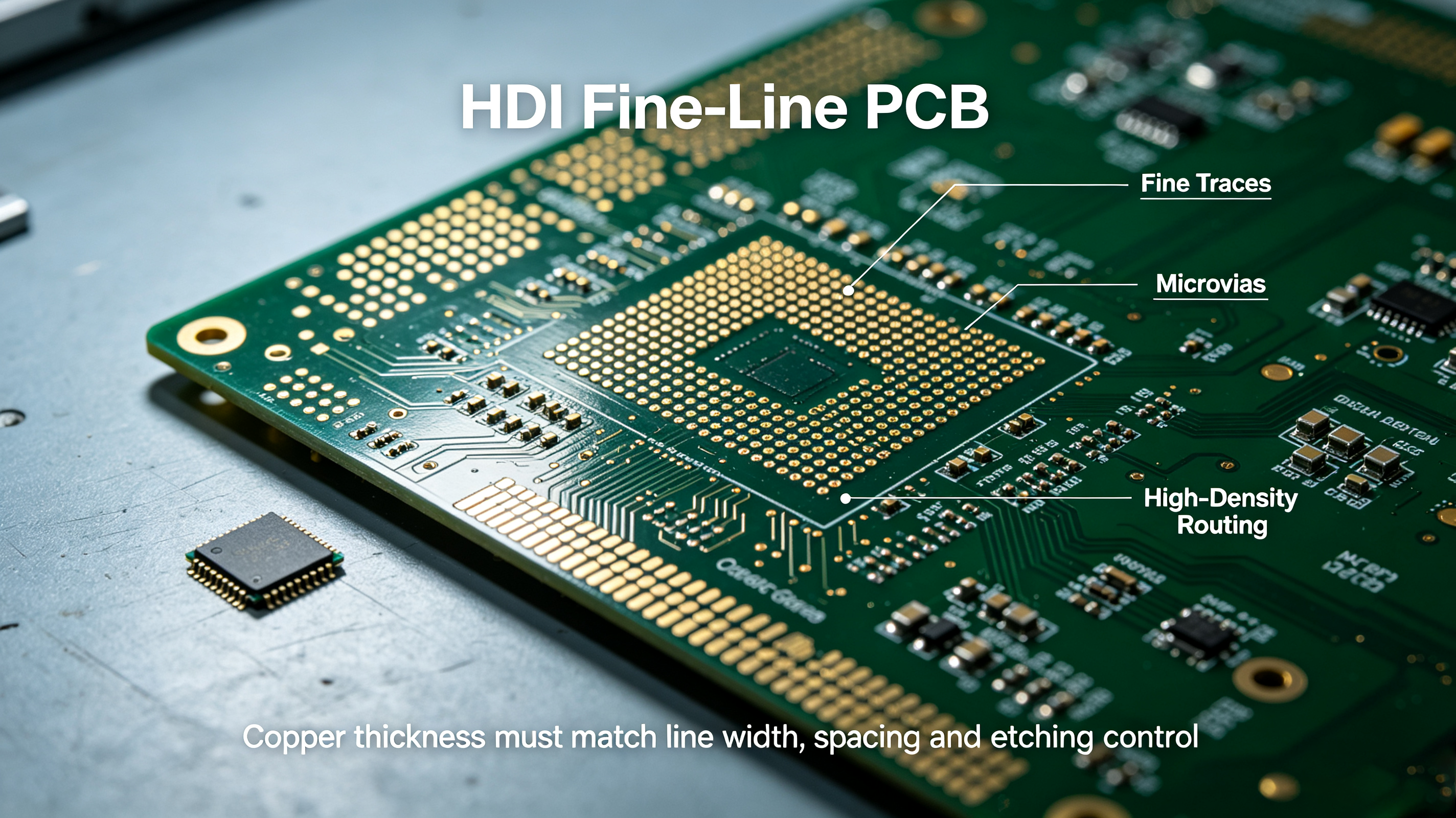
For high-density and high-speed PCBs, excessive copper thickness can make etching more difficult and affect fine-line control and impedance design. High-speed, high-frequency, and HDI applications therefore require a balance between current capacity, signal integrity, and manufacturability.
04 | Copper Thickness Should Match the Application
There is no universal copper thickness for every PCB. Engineers should consider operating current, trace width, signal frequency, thermal requirements, layer count, and manufacturing cost when selecting copper thickness.
Guangzhou Kevis: Flexible PCB Manufacturing Solutions
Guangzhou Kevis Electronic Technology Co., Ltd. specializes in PCB manufacturing and PCBA assembly. We provide multilayer PCB, HDI, flexible PCB, aluminum PCB, and customized copper thickness solutions for different applications, together with turnkey services including PCB fabrication, SMT/DIP assembly, component sourcing, and testing.
Choosing the right copper thickness is not simply about current capacity—it is about balancing PCB performance, reliability, and manufacturing cost.
Kevis — Your Reliable PCB & PCBA Manufacturing Partner.